A Cochrane systematic review is produced under the oversight of the Cochrane Collaboration, follows the methodology prescribed in the Cochrane Handbook for Systematic Reviews of Interventions (Higgins et al., 2023), and is published in the Cochrane Database of Systematic Reviews (CDSR) through Wiley. A non-Cochrane systematic review is conducted independently by researchers, follows reporting standards like PRISMA 2020, and can be submitted to any peer-reviewed journal. The core difference is not quality itself but the infrastructure surrounding each path. Cochrane reviews operate within a structured editorial system with mandatory protocols, assigned editorial teams, and periodic updates. Independent reviews offer researchers full control over scope, timeline, journal selection, and methodology. Both types can achieve high methodological rigor when conducted properly, but the journey from protocol to publication differs substantially in ways that affect your career strategy, timeline, and research impact.
How the Cochrane Editorial Process Shapes Every Review
The Cochrane Collaboration operates through approximately 53 review groups, each covering a specific clinical or healthcare domain. When you propose a Cochrane review, you do not simply submit a finished manuscript. You first register a title with the relevant Cochrane Review Group, then develop a full protocol that undergoes peer review before you begin searching for studies. This protocol locks your research question, search strategy, inclusion criteria, and analysis plan before data collection starts.
Each Cochrane Review Group assigns a Managing Editor and a Co-ordinating Editor who oversee your review from protocol to publication. These editors provide methodological guidance, coordinate peer review, and ensure compliance with the Cochrane Handbook. The editorial team may also assign a statistical editor who reviews your meta-analysis methods and a consumer reviewer who evaluates the plain language summary.
Independent systematic reviews follow a fundamentally different editorial path. You develop your protocol, register it on PROSPERO if you choose to, and conduct the review according to your own timeline. Once the manuscript is complete, you submit it to a journal of your choosing, where it undergoes standard peer review. The journal's editors and reviewers assess your work, but they do not oversee the process from the beginning the way Cochrane editors do.
This structural difference has practical consequences. Cochrane's embedded editorial oversight catches methodological problems early, before you invest months in data extraction and analysis. Independent reviews rely on the research team's own expertise to maintain quality throughout the process, with external scrutiny arriving only at the peer review stage. For early-career researchers unfamiliar with systematic review methodology, Cochrane's guided process can be a valuable learning experience. For experienced teams, the oversight can feel restrictive.
Methodological Requirements: Cochrane Handbook vs PRISMA 2020
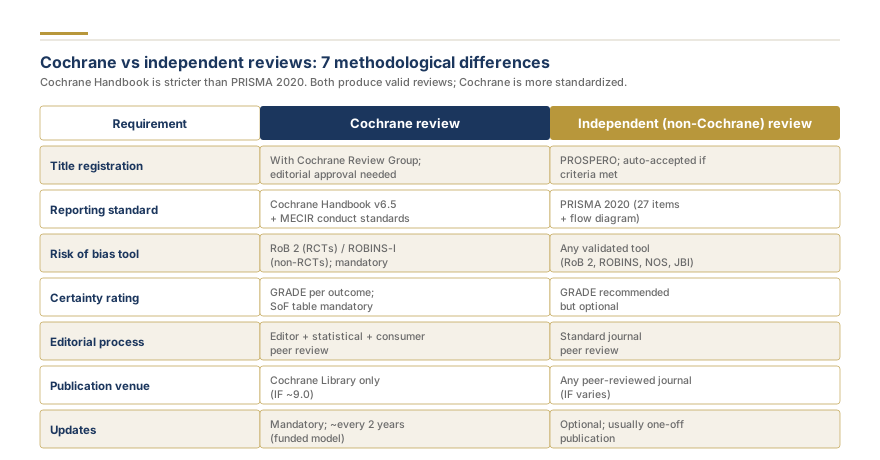
Cochrane reviews must follow the Cochrane Handbook for Systematic Reviews of Interventions, currently in version 6.4 (Higgins et al., 2023). This handbook prescribes specific methods for every stage of the review, from search strategy construction to risk of bias assessment to data synthesis. Deviation from handbook methods requires explicit justification approved by the editorial team.
Risk of bias assessment in Cochrane reviews must use the RoB 2 tool for randomized trials and ROBINS-I for non-randomized studies. The Cochrane Handbook specifies how to apply these tools, how to present the results, and how to incorporate bias assessments into the overall certainty of evidence using the GRADE framework. You can explore these assessment tools using our risk of bias tool to understand the domains and judgment criteria involved.
Independent systematic reviews have more methodological flexibility. While PRISMA 2020 guidelines provide a comprehensive reporting framework, they are reporting standards rather than methodological mandates. Researchers conducting independent reviews can choose from multiple risk of bias tools, including the Newcastle-Ottawa Scale, the Joanna Briggs Institute tools, or domain-specific instruments. They can select any meta-analytic model, use any statistical software, and structure their synthesis however they see fit.
This flexibility is both a strength and a risk. Experienced researchers can tailor their methods to the specific research question, choosing approaches that the Cochrane Handbook might not cover or might not prioritize. However, the absence of mandatory methodological standards means that independent reviews vary widely in quality. A 2019 study published in the Journal of Clinical Epidemiology found that only 36 percent of non-Cochrane systematic reviews fully adhered to PRISMA reporting guidelines, compared to over 90 percent compliance in Cochrane reviews.
| Feature | Cochrane Systematic Review | Non-Cochrane Systematic Review |
|---|---|---|
| Protocol registration | Mandatory, peer-reviewed before data collection | Recommended (PROSPERO), not required |
| Methodology standard | Cochrane Handbook (mandatory) | PRISMA 2020 (recommended reporting) |
| Risk of bias tool | RoB 2 / ROBINS-I (required) | Researcher's choice (NOS, JBI, RoB 2, etc.) |
| Certainty of evidence | GRADE (required) | Optional |
| Statistical software | RevMan (standard) or approved alternatives | Any (R, Stata, RevMan, CMA, etc.) |
| Editorial oversight | Continuous from protocol to publication | Journal peer review only |
| Publication venue | CDSR exclusively | Any peer-reviewed journal |
| Update requirement | Mandatory periodic updates | No update obligation |
| Timeline | 12 to 18 months typical | 4 to 8 months typical |
| Topic restrictions | Healthcare interventions primarily | Any discipline, any topic |
| Open access | CDSR (Wiley), varies by country | Depends on journal and funding |
Timeline Comparison: 12 to 18 Months vs 4 to 8 Months
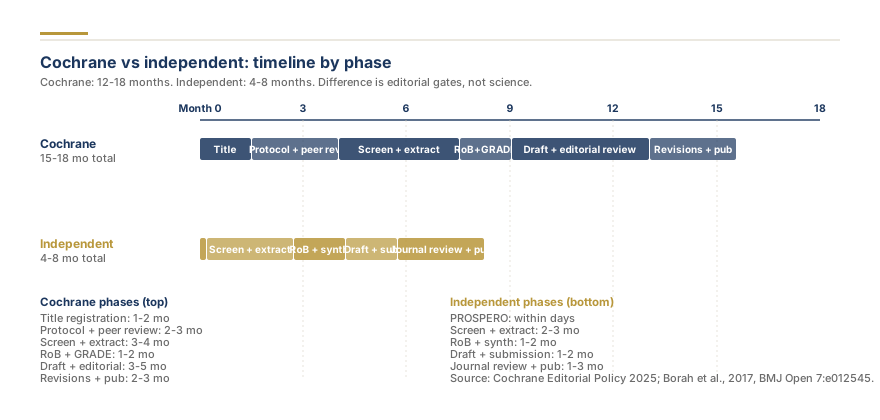
The timeline difference between Cochrane and independent systematic reviews is one of the most significant practical considerations for researchers choosing between the two paths.
A Cochrane review typically takes 12 to 18 months from title registration to publication, and many take longer. The protocol development and peer review phase alone can consume 3 to 6 months. After the protocol is approved, you conduct the review following the agreed-upon methods, which adds another 6 to 10 months for searching, screening, data extraction, analysis, and writing. The final manuscript then undergoes Cochrane editorial review, which includes methodological checks, statistical review, copy editing, and formatting for CDSR publication.
An independent systematic review can be completed in 4 to 8 months when the research team works efficiently. Without the protocol approval bottleneck, you can begin searching immediately after finalizing your protocol internally. You control the pace of data extraction and analysis without waiting for editorial feedback at intermediate stages. Once the manuscript is ready, journal peer review typically takes 2 to 4 months, bringing the total timeline to 6 to 12 months from start to acceptance.
Several factors extend the Cochrane timeline beyond the base estimate. Editorial backlogs within Cochrane Review Groups can delay protocol approval and manuscript review. Mandatory revisions requested by Cochrane editors require additional rounds of review that do not exist in the independent path. The requirement to produce a plain language summary and structured abstract in Cochrane's specific format adds work that independent reviews avoid.
For researchers facing tenure clocks, grant deadlines, or graduation timelines, the speed advantage of independent reviews can be decisive. A PhD candidate who needs publications before their defense date may not be able to absorb an 18-month Cochrane timeline. Conversely, researchers with stable positions and long-term research programs may prefer Cochrane's thorough process because the extended timeline produces a review with built-in credibility.
Impact Factor, Citations, and Career Considerations
The Cochrane Database of Systematic Reviews carries an impact factor that has historically ranked among the top medical journals. The 2023 impact factor was 8.8, placing CDSR in the first quartile (Q1) for medicine. However, this impact factor applies to the entire database rather than individual reviews, and citation rates vary enormously across Cochrane reviews depending on the topic and clinical relevance.
Independent systematic reviews can potentially achieve higher citation impact by targeting specialty journals with concentrated readerships. A systematic review on a specific surgical technique published in a top surgery journal may receive more citations from the target audience than the same review published in CDSR, where it competes for attention with thousands of other reviews across all medical specialties. The choice depends on whether you want broad recognition across medicine or concentrated impact within your specialty.
Career strategy should influence your decision. Early-career researchers benefit from the Cochrane brand on their CV, which signals methodological competence and commitment to evidence-based practice. The Cochrane name carries weight with hiring committees, grant panels, and promotion boards, particularly in clinical departments and public health. However, Cochrane authorship comes with obligations: you may be asked to update the review in the future, and the Cochrane Collaboration retains certain rights over the content.
Independent reviews offer full intellectual ownership and publication flexibility. You choose the journal, control the narrative framing, and retain standard copyright arrangements. For researchers building a publication portfolio across multiple journals, independent reviews provide more strategic flexibility than concentrating publications in a single database.
Choosing between Cochrane and independent publication? The decision affects your timeline, career positioning, and research impact for years. Research Gold helps researchers navigate this choice and execute either path with confidence. Whether you need a rigorous systematic review for Cochrane submission or a fast-track independent review targeting a high-impact specialty journal, our team handles the methodology while you focus on the clinical questions. Get a personalized recommendation based on your specific research goals and timeline.