Nursing systematic reviews follow specific frameworks including JBI methodology and Cochrane standards. Learn how to conduct, appraise, and publish a systematic review for nursing research.
Dr. Sarah Mitchell
February 20, 2026
Key Takeaways
Nursing systematic reviews frequently use the Joanna Briggs Institute (JBI) methodology alongside Cochrane methods, with JBI offering specific guidance for qualitative and mixed-methods synthesis
CINAHL is the essential database for nursing reviews and must be searched alongside MEDLINE and the Cochrane Library to capture nursing-specific evidence
Qualitative evidence synthesis, including meta-aggregation and thematic synthesis, is more common in nursing reviews than in clinical medicine systematic reviews
The PCC (Population, Concept, Context) framework is preferred over PICO for scoping reviews in nursing, while PICO remains standard for intervention reviews
Nursing journals like Journal of Advanced Nursing, Worldviews on Evidence-Based Nursing, and JBI Evidence Synthesis are top publication targets for nursing systematic reviews
A professional systematic review team familiar with nursing methodology can complete a nursing review in 8-12 weeks with JBI or Cochrane compliance
A systematic review in nursing follows the same rigorous methodology as any health sciences systematic review but incorporates frameworks and databases specific to nursing practice, education, and research. Nursing systematic reviews are essential for building the evidence base that informs clinical decision-making, nursing education curricula, policy development, and patient care standards. Doctoral students translating this evidence into practice can browse our evidence-based DNP project ideas for topic inspiration, or get hands-on nursing writing support for the capstone itself. The Joanna Briggs Institute and Cochrane Collaboration provide the two primary methodological frameworks used in nursing evidence synthesis.
Nursing research has unique characteristics that affect how systematic reviews are designed and conducted. Nursing studies frequently use qualitative, mixed-methods, and quasi-experimental designs alongside randomized controlled trials. Patient experiences, care delivery processes, and nursing interventions often require synthesis approaches beyond traditional meta-analysis. This guide covers the specific considerations, databases, frameworks, and publication strategies that nursing researchers need to conduct and publish high-quality systematic reviews.
Why Systematic Reviews Matter in Nursing
Evidence-based nursing practice depends on synthesized evidence, not individual studies. A single randomized controlled trial or qualitative study provides one data point. A systematic review aggregates all available evidence on a clinical question, providing a comprehensive picture that individual studies cannot offer. This is why systematic reviews sit at the top of the evidence hierarchy in nursing and are the foundation of clinical practice guidelines.
The nursing profession has increasingly prioritized evidence-based practice over the past two decades, moving from tradition-based and experience-based care decisions toward care informed by the best available research evidence. Systematic reviews are the bridge between primary research and bedside practice. Nursing organizations including the American Nurses Association, the Royal College of Nursing, and the International Council of Nurses all recognize systematic reviews as the gold standard for evidence synthesis.
For nurse researchers, conducting a systematic review also builds methodological expertise, establishes research credibility, and contributes to the profession's knowledge base. Published nursing systematic reviews are highly cited because they serve as reference points for clinical guidelines, curriculum development, and policy decisions.
Choosing the Right Methodology: JBI vs Cochrane
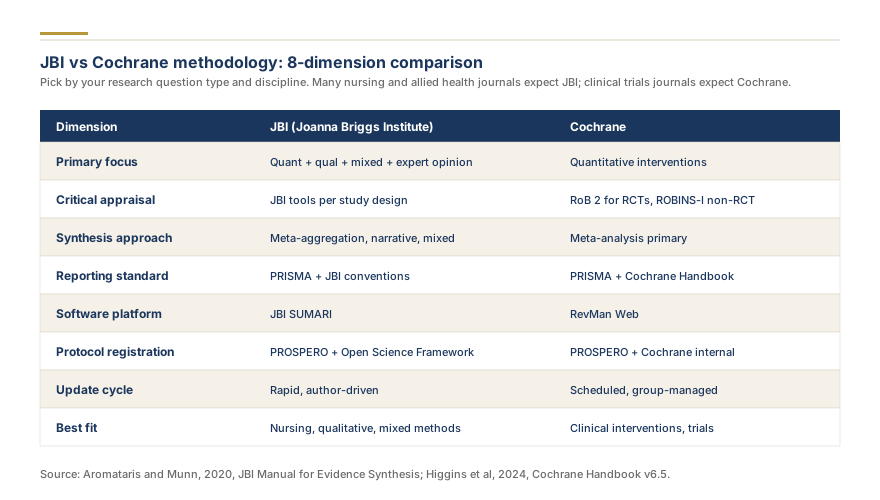
JBI vs Cochrane methodology: 8-dimension comparison
The two dominant frameworks for nursing systematic reviews are the Joanna Briggs Institute (JBI) methodology and the Cochrane methodology. While both produce rigorous evidence syntheses, they differ in scope and approach.
JBI Methodology
The JBI is an international research organization based at the University of Adelaide that specializes in evidence-based healthcare with particular strength in nursing and allied health. JBI provides methodology for nine types of systematic reviews:
Effectiveness reviews (interventions, similar to Cochrane)
Qualitative reviews (using meta-aggregation)
Mixed-methods reviews (combining quantitative and qualitative evidence)
JBI methodology is particularly valuable for nursing because it accommodates the qualitative and mixed-methods research designs common in nursing scholarship. The JBI Manual for Evidence Synthesis provides step-by-step guidance for each review type.
Cochrane Methodology
The Cochrane Collaboration focuses primarily on reviews of healthcare interventions using quantitative methods. Cochrane reviews follow the methodology outlined in the Cochrane Handbook for Systematic Reviews of Interventions and are considered the gold standard for intervention effectiveness reviews.
Cochrane methodology is appropriate for nursing reviews that focus on clinical interventions with measurable outcomes, particularly when randomized controlled trials are available and meta-analysis fundamentals is the intended synthesis approach.
Essential Databases for Nursing Systematic Reviews
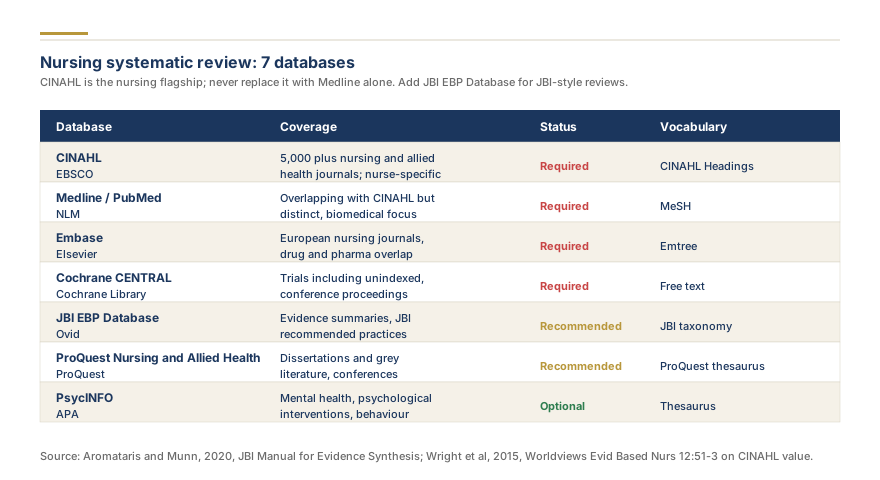
Nursing systematic review: 7 databases
Database selection is critical for comprehensive evidence retrieval in nursing reviews. Missing a key database can result in excluding relevant nursing studies that are not indexed elsewhere.
CINAHL (Cumulative Index to Nursing and Allied Health Literature)
CINAHL is the single most important database for nursing systematic reviews and must be included in every nursing evidence synthesis. CINAHL indexes over 5,500 nursing and allied health journals, many of which are not indexed in MEDLINE. CINAHL uses its own controlled vocabulary (CINAHL headings) that includes nursing-specific terms not found in MeSH.
MEDLINE is the primary biomedical database and should be searched alongside CINAHL. Many clinical nursing studies, particularly those involving pharmacological interventions or medical procedures, are indexed in MEDLINE. Use MeSH terms combined with free-text keywords for comprehensive retrieval.
Additional Databases
Depending on your topic, also consider:
PsycINFO for mental health nursing, behavioral health, and psychology-related topics
Embase for pharmacological and drug-related interventions
Cochrane Central Register of Controlled Trials for RCTs
JBI EBP Database for existing JBI evidence syntheses
Education databases (ERIC) for nursing education topics
Social science databases for community health nursing
Need help with your evidence synthesis?
Our methodologists handle narrative synthesis, thematic analysis, umbrella reviews, and all forms of evidence synthesis, following established frameworks.
One of the distinguishing features of nursing systematic reviews is the frequent inclusion of qualitative evidence synthesis. While medical systematic reviews predominantly focus on quantitative data and meta-analysis, nursing research often explores patient experiences, perceptions, meanings, and care processes that require qualitative synthesis methods.
Meta-Aggregation (JBI Approach)
Meta-aggregation is JBI's approach to synthesizing qualitative findings. It involves extracting findings from individual qualitative studies, assessing each finding for credibility (supported by direct quotes or field notes), categorizing similar findings, and aggregating categories into synthesized findings that can inform practice recommendations.
Meta-aggregation preserves the original meaning of qualitative findings rather than reinterpreting them, which is important for maintaining the integrity of participant voices in nursing research.
Thematic Synthesis
Thematic synthesis, developed by Thomas and Harden, involves coding the findings of primary qualitative studies, developing descriptive themes from the codes, and generating analytical themes that go beyond the original studies. This approach is widely used in nursing systematic reviews published in journals like the Journal of Advanced Nursing.
Mixed-Methods Synthesis
When your review includes both quantitative and qualitative studies, JBI methodology provides guidance for convergent or sequential mixed-methods synthesis. This allows you to integrate findings from randomized controlled trials about intervention effectiveness with qualitative findings about patient experiences of those interventions, providing a comprehensive evidence base for nursing practice.
Need expert support for your nursing systematic review? Our methodologists are experienced in both JBI and Cochrane frameworks, including qualitative evidence synthesis and mixed-methods reviews. request a free quality appraisal quote to discuss your nursing research project, or explore our nursing systematic review support.
Context: Setting, geographic location, or cultural context
Developing Eligibility Criteria
Nursing systematic reviews should specify eligibility criteria that reflect the unique characteristics of nursing research:
Study designs: Specify which designs to include. Nursing reviews often include quasi-experimental studies, pre-post designs, and qualitative studies alongside RCTs
Settings: Specify healthcare settings (acute care, primary care, community, long-term care)
Participants: Define the patient population and, where relevant, the nursing workforce characteristics
Interventions: Clearly describe what constitutes a "nursing intervention" for your review
Outcomes: Include both patient outcomes and nursing-sensitive outcomes
Publication dates and language: State your date range and language restrictions
Protocol Registration
Register your protocol on our guide to prospero for intervention reviews or the JBI Systematic Review Register for JBI reviews. Protocol registration demonstrates methodological rigor and prevents duplication. Follow the PRISMA-P checklist when writing your protocol.
Quality Assessment in Nursing Reviews
Nursing systematic reviews use validated critical appraisal tools to assess the methodological quality of included studies.
For RCTs: Use the RoB 2 tool (Cochrane) or JBI Critical Appraisal Checklist for Randomized Controlled Trials
For qualitative studies: Use JBI Critical Appraisal Checklist for Qualitative Research (10-item checklist) or the CASP Qualitative Checklist
For cross-sectional studies: Use JBI Critical Appraisal Checklist for Analytical Cross-Sectional Studies
Quality assessment should be conducted by two independent reviewers with disagreements resolved through discussion or a third reviewer. Use our risk of bias visualization tool to create summary figures for your review.
Data Synthesis Options for Nursing Reviews
The synthesis approach depends on your included studies and research question:
Narrative synthesis when studies are too heterogeneous for statistical pooling. Organize findings by outcome, intervention type, or population subgroup
Meta-aggregation (JBI) for qualitative studies
Vote counting is generally discouraged but sometimes used as a supplementary descriptive approach
Address heterogeneity explained transparently. Nursing interventions are often complex (involving multiple components, varying delivery formats, and different practice contexts), which naturally produces higher heterogeneity than pharmacological interventions.
Insufficient description of qualitative synthesis methods
Responding to Peer Review
Nursing systematic review reviewers frequently ask for additional methodological detail, sensitivity analyses, and clearer reporting of the synthesis process. Our guide on responding to peer reviewers covers strategies for addressing common reviewer concerns.
When your nursing research question involves both quantitative outcomes and patient experiences, consider a mixed methods review approach.
Frequently Asked Questions
5
The Joanna Briggs Institute (JBI) methodology is the most widely used framework for nursing systematic reviews, particularly for qualitative and mixed-methods reviews. Cochrane methodology is preferred for quantitative intervention reviews. The choice depends on your research question: use JBI for reviews of qualitative evidence, prevalence, or mixed methods, and Cochrane for reviews of clinical interventions with meta-analysis.
At minimum, search CINAHL (the Cumulative Index to Nursing and Allied Health Literature), MEDLINE via PubMed, and the Cochrane Library. Depending on your topic, also consider PsycINFO for mental health nursing topics, EMBASE for pharmacological interventions, and the JBI EBP Database for existing nursing evidence summaries. Grey literature sources like ProQuest Dissertations and conference proceedings are also important.
Yes, qualitative systematic reviews are well-established in nursing research. The JBI methodology provides specific guidance for qualitative evidence synthesis using meta-aggregation, which preserves the findings of original qualitative studies. Thematic synthesis is another approach. These reviews synthesize patient experiences, perceptions, and meanings, which are central to nursing practice and care delivery.
A nursing systematic review typically takes 12 to 18 months for academic teams working part-time. The timeline is similar to other health science systematic reviews, though nursing reviews that include qualitative evidence synthesis may take slightly longer due to the interpretive nature of qualitative data extraction. Professional teams can complete nursing reviews in 8 to 12 weeks.
While not strictly required, collaborating with a health sciences librarian or information specialist is strongly recommended and increasingly expected by peer reviewers. Librarians have expertise in database-specific search syntax, controlled vocabulary including CINAHL headings and MeSH terms, and search strategy validation. Many nursing journals now require a librarian co-author or consultation disclosure.
Share
Found this useful? Share it with your colleagues.
Need help with your evidence synthesis?
Our methodologists handle narrative synthesis, thematic analysis, umbrella reviews, and all forms of evidence synthesis, following established frameworks.
Complex Synthesis? Our PhD Team Specializes in Every Type.
Systematic reviews, narrative synthesis, umbrella reviews, and rapid reviews. We match the right methodology to your research question and deliver a publication-ready manuscript.
Our promise: Free rework on synthesis or GRADE assessment if reviewers push back.
4.9 / 5Quote within a few hoursPRISMA 2020 + GRADE certaintyPhD methodologistConfidential by default
Dr. Sarah Mitchell holds a PhD in Biostatistics from Johns Hopkins Bloomberg School of Public Health and has over 15 years of experience in systematic review methodology and meta-analysis. She has authored or co-authored 40+ peer-reviewed publications in journals including the Journal of Clinical Epidemiology, BMC Medical Research Methodology, and Research Synthesis Methods. A former Cochrane Review Group statistician and current editorial board member of Systematic Reviews, Dr. Mitchell has supervised 200+ evidence synthesis projects across clinical medicine, public health, and social sciences.
Complex Synthesis? Our PhD Team Specializes in Every Type.
Systematic reviews, narrative synthesis, umbrella reviews, and rapid reviews. We match the right methodology to your research question and deliver a publication-ready manuscript.
CHEERS 2022 checklist explained: all 28 items, what changed from CHEERS 2013, and how to report a cost-effectiveness analysis so payers and journals can use it.
SPIRIT 2025 checklist explained: all 34 items by section, what changed from SPIRIT 2013, and how the protocol lines up with CONSORT 2025 when you report the trial.
ARRIVE 2.0 guidelines explained: the Essential 10 and the Recommended Set, what changed from ARRIVE 2010, and the items journals check in animal research reports.